Emotion Regulation in the Transition to Adolescence (ERT)
JAN 2019 - MAY 2020
An interdisciplinary research project involving cognitive science, child development, and the medical field. Investigating how children regulate negative emotions during the transition into adolescence.
Role
Skills
Project Overview
This cross-sectional study investigates how children regulate negative emotions during the transition into adolescence, with a focus on the role of maternal presence. While maternal support has been shown to facilitate emotion regulation in childhood, its effectiveness during adolescence remains unclear.
Using event-related potentials (ERPs), the study captures neural markers to distinguish between immediate emotional reactivity and later regulatory processes. Self-report measures of emotional support and parental emotion coaching are also included to examine how parenting practices influence adolescents' self-regulation abilities.
*This research was conducted under Cognitive Development and Neuroimaging Lab at University of Minnesota.
Problem We Found
“How do adolescents regulate their negative emotions?”
“How does the presence of caregiver affect their emotion regulation process?”
Emotion regulation is a core skill that supports learning, decision-making, social interaction, and well-being. In early development, children rely heavily on social regulation—the process of using others, such as parents or caregivers, to help reduce stress and negative emotions—until their independent emotion regulation abilities mature.
As children transition into adolescence, however, the effectiveness of parental social regulation diminishes significantly. This developmental shift coincides with increased emotional sensitivity and vulnerability, making adolescence a period of heightened risk for emotional dysregulation. Difficulties in regulating negative emotions during this time have been linked to the onset of mood disorders such as anxiety and depression.
Despite the importance of this transition, relatively little is known about how emotion regulation strategies change from pre-adolescence to early adolescence.
Our Approach
Recruitment & Participants
Recruited 11–14-year-old children and their mothers (target n = 100). Exclusion criteria included psychiatric diagnoses, EEG contraindications, and neurodevelopmental disorders.
Self-Report Measures
Collected data through demographic surveys, validated emotion regulation questionnaires (e.g., ERQ, DERS, MESQ), parenting style assessments (e.g., CCNES), and pubertal self-report measures to capture developmental and emotional contexts of both mothers and children.
EEG & Behavioral Coding
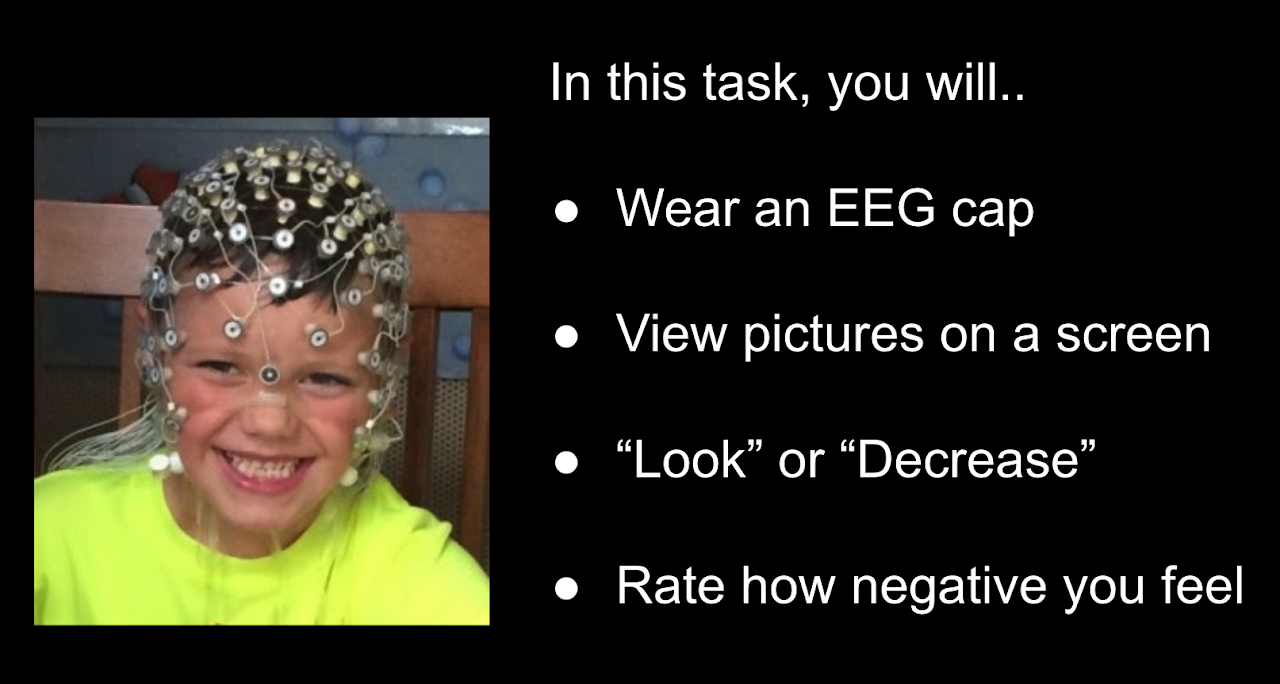
An EEG-based emotion regulation task where children viewed and reappraised negative stimuli with or without maternal presence. ERPs were used to capture neural markers of emotional reactivity and regulation.
Following the task, mother–child dyads participated in a recorded conversation about recent emotional experiences. Video data were later analyzed using a behavioral coding scheme to examine patterns of parental emotional support and child emotional expression.


Key Results
Results of the study will be updated soon.
- •This research is one of the ongoing research projects in the Cognitive Development and Neuroimaging Lab at the University of Minnesota. Data collection for this study is currently on hold.